| |
|
|
|
 |
Director's
Update: A New Year and a New Era
This
month, on January 20, we took a moment to watch the inauguration
of President Obama on screens in several conference rooms. It
was wonderful to share in the optimism of the event with other
members of the ALS community and hear messages of change, hope,
and new personal responsibility. It was also encouraging to hear,
on the same day, that the Senate confirmed our (former) Lab Director,
Steve Chu, as the new Secretary of Energy.
I looked for themes in the inauguration
speech that will affect our work, and they were there: "We
will restore science to its rightful place, and wield technology's
wonders to raise health care's quality and lower its cost.
We will harness the sun and the winds and the soil to fuel
our cars and run our factories. And we will transform our schools
and colleges and universities to meet the demands of a new
age. All this we can do. All this we will do." I felt
some pride in knowing that we will contribute in these areas.
Another theme in the speech, international
cooperation and collaboration, we often take for granted in
operating a "user facility." I
also note that we are inherently democratic in our structure,
in the open way we provide service to a broad range of users.
As President Obama noted, it was a wonderful
moment, but we cannot be blind to the challenges we face, economically
and technologically. In the last few weeks we have heard about
potential new funding for science, under the American Recovery
and Reinvestment Act, a part of the broader stimulus package
being considered by Congress. What role we will play in the economic
recovery, how we can best utilize existing and possible additional
resources, and what the funding outlook is long-term, all are yet
to be determined.
We have been working to clarify the role that
the ALS does and can play in the future of science and technology,
in a variety of ways. Specifically, we are developing a better
understanding of the ways that ALS scientists contribute to energy
research. We have worked with other labs (SLAC, ANL, and BNL)
to develop a white paper on the science and technology of future
light sources. Also, we completed a report on a recent workshop
on science with coherent soft x-rays. Finally, we are bringing
our Strategic Plan to the Department of Energy (DOE) and will
work with it on the renewal of the ALS. In the next few months
we hope to have a greater understanding of the overall budget
situation for light sources, but at this moment, the situation
is uncertain, and our immediate goal is to complete our planning
processes.
As most of our users and all our staff know, over the last few
weeks, we have been focusing our attention on the upcoming audit
by the DOE of our safety practices and culture. The preparation
for this audit has made us a better and safer facility, and I
want to thank Jim Floyd, our users, and the entire ALS staff
for all of their efforts in preparation for this review, which
will occur in major part at the end of January.
Finally, on your way to lunch at the cafeteria, I encourage
you to take a look at the new user guesthouse. Its construction
has gone remarkably rapidly, it looks very impressive, and I
look forward its opening later this year.

Roger Falcone, Guest House project manager
Steve Rossi, and
UC Project Manager Kirk Haley tour the Guest
House construction site.
Roger Falcone |
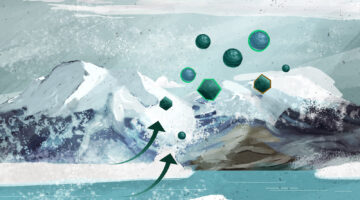
Reaction-Driven
Restructuring of Bimetallic Nanoparticle Catalysts
Catalytic systems based on bimetallic particles
with controlled size, composition, and structure dispersed on
a high-surface-area support are widely used for catalytic reforming,
pollution control, alcohol oxidation, and electrocatalysis in
fuel cells. Owing to the nanoscale size of the particles, the
modification of the surface structure and composition that may
occur when reaction conditions change can have dramatic effects
on catalyst activity and selectivity. Working at the ALS, a University
of California, Berkeley–Berkeley Lab group has used an ambient-pressure
x-ray photoelectron spectroscopy (APXPS) apparatus to demonstrate
that bimetallic nanoparticle catalysts can undergo profound structural
and chemical changes in response to reactive environments at
ambient pressures, thereby opening the way for engineering catalysts
with enhanced activity and selectivity. Full
story.

Publication about this research: F. Tao, M.E.
Grass, Y. Zhang, D.R. Butcher, J.R. Renzas, Z. Liu, J.Y. Chung,
B.S. Mun, M. Salmeron, and G.A. Somorjai, "Reaction-driven
restructuring of Rh-Pd and Pt-Pd core-shell nanoparticles," Science 322, 932 (2008).
Gabor Somorjai
Miquel Salmeron |
Nanoscale
Chemical Imaging of a Working Catalyst
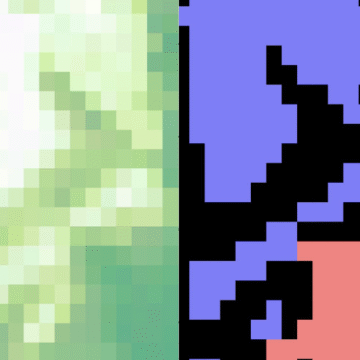
The heterogeneous catalysts used in most chemical
processes typically consist of nanoscale metal or metal oxide
particles dispersed on high-surface-area supports. While these
particles are the active elements of the catalyst, the overall
performance depends not only on their size and composition but
also on their multiple interactions with the support, reactants,
and products. Probing this chemical soup in real time under realistic
reaction conditions is such a tall order that in some cases even
the catalytically active chemical species is not known. A Dutch
team working at the ALS has combined scanning transmission x-ray
microscopy with a reaction chamber adapted from electron microscopy
to identify the chemical species present for an iron-based Fischer–Tropsch
synthesis catalyst and to image their distribution on the nanoscale.
When developed further, this new tool may give chemists the ability
to design and tailor catalysts for maximum selectivity and efficiency
in a wide range of chemical processes. Full
Story.

Publication about this research: E. de Smit,
I. Swart, J.F. Creemer, G.H. Hoveling, M.K. Gilles, T. Tyliszczak,
P.J. Kooyman, H.W. Zandbergen, C. Morin, B.M. Weckhuysen, and
F.M.F. de Groot, "Nanoscale
chemical imaging of a working catalyst by scanning transmission
x-ray microscopy," Nature 456, 222 (2008).
Frank de Groot
Bert Weckhuysen
|
Reminder:
Experimental Safety Sheet Procedure
ALS
users are reminded that safety at the ALS is of paramount importance.
To ensure that all experiments are run safely, als staff members
need details of the experiments that will be run, including any
hazards, well before the experiment time. We then
assess the hazards, ensure that proper controls are established,
and provide inspections for the experiment setup as appropriate.
The mechanism for collecting and documenting this procedure is
the Experimental Safety Sheet (ESS), which is generated when
a proposal is submitted to do work at the ALS and is reviewed
annually.
It is critical that ALS users ensure that the ESS is an accurate
description of the experiment, and all users on site at the ALS
are required to sign the ESS before the start of their experiment.
Beamline staff and the Experiment Coordination Group (ext. 7222)
are available to help you through the process.
In addition, a one-page form (User Experiment Form) is required
for each visit, detailing the dates of the experiment and which
users are actually present for the visit and summarizing the
hazards. Both the ESS and the User Experiment Form need to be
posted at the sector board on the outer wall of the ALS and close
to the beamline.
Health, Safety, and Security auditors
will be visiting the ALS this week. Users of the ALS during
this time may be asked by an auditor for an interview about
their work at the ALS and their understanding of the ESS process.
If you are interested in learning more about the ESS procedure,
the online course ALS1001 serves as a good introduction.
Sue Bailey
|
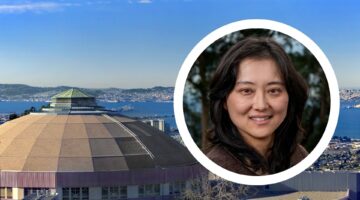
UEC Corner: Introducing the 2009 Committee
I am very happy to introduce this year's ALS Users' Executive Committee
(UEC) and to serve as your chairman in 2009. We represent you, the
ALS user community, to the ALS management and funding agencies. With
the support of the ALS staff, the UEC also runs the annual ALS Users'
Meeting each fall. While this year's UEC spans a broad range of research
interests, we rely on your input, concerns, and suggestions to give
direction to our work. Please do not hesitate to contact any one of
us with issues that concern our community or your work at the ALS.
We will do our best to listen and to elevate your concerns to the
ALS management.
At the same time as we welcome our new UEC members Chris Jacobsen,
David Osborn, and Yayoi Takamura, I would like to thank our outgoing
members for their service and their involvement: Elke Arenholz, Tony
van Buuren (past chair), Alessandra Lanzara, and Simon Morton. Simon,
however, will be continuing on in two roles: as user representative
on the User Support Building and Guest House committees and as a representative/consultant
for macromolecular crystallography users. A special thank you is also
due to our outgoing UEC chair, Hendrik Ohldag, whose involvement continues
through 2009.
I have been working at the ALS since 1993, serving as a beamline
scientist for over 10 years. I am especially sensitive to quality-of-life
issues at the ALS and am aware of the essential roles that beamline
scientists play in every experiment. Among other issues, I'd like
to help make beamline scientists' lives easier, by working with the
ALS to simplify and improve how we report new publications and beamline
usage.
The UEC will be active in a number of issues this year. Safety is
front and center, and finding ways to live and work within the new
requirements is paramount for each of us. UEC members are also helping
to improve the proposal process at the ALS and providing users' perspectives
to a division management faced with a difficult budget climate.
You can usually find me at Beamline 11.3.2, so please
don't hesitate to introduce yourselves and to let me know if I
or the broader UEC group can be of service. We are looking forward
to working with you and for you in 2009. For more info about the
UEC, go to the UEC
Web page.
2009 ALS UEC Members:
Kenneth Goldberg (chair), LBNL (2007-09)
Yves Acremann, SLAC (2008-10)
Peter Fischer, LBNL (2007-09)
Phil Heimann, ALS (2008-10)
Franz Himpsel, Univ. of Wisconsin, Madison (2007-09)
Chris Jacobsen, Stony Brook University (2009-11)
Hendrik Ohldag (past chair), SSRL (2006-08)
David Osborn, Sandia National Laboratories (2009-11)
Anne Sakdinawat (student), UC Berkeley, UC San Francisco, LBNL
(2008-10)
Wayne Stolte, Univ. of Nevada, Las Vegas (2008-10)
Yayoi Takamura, UC Davis (2009-11)
Simon Morton, LBNL (2006-08, 2009 special assignee)
Ken Goldberg
|
Honors and Awards: Eli Rotenberg and Rich
Saykally
Eli
Rotenberg, Deputy Leader of the ALS Scientific Support Group,
has been elected a Fellow of the American Physical Society (APS) "For
outstanding contributions to the understanding of quantum electronic
properties of nanophase and reduced dimensionality systems by
creative applications of angle-resolved photoemission spectroscopy." Election
to Fellowship in the APS is limited to no more than one half
of one percent of the membership, and is recognition by peers
of outstanding contributions to physics.
Long-time ALS user and Berkeley Lab chemical scientist Richard Saykally
has received the Peter Debye Award in Physical Chemistry, bestowed
by the American Chemical Society. Laser spectroscopy of liquids, surfaces,
and clusters, synchrotron x-ray spectroscopy of liquids and liquid
surfaces, and femtosecond nonlinear optical spectroscopy of liquid
surfaces are among the areas in which Saykally conducts research. Peter
Debye, the award's namesake, was a Dutch physicist and physical chemist,
and Nobel laureate who died in 1966. |
A Successful SES IV in San Francisco
The Fourth Synchrotron Environmental Science conference (SES IV),
held December 11-13, 2008, in San Francisco was co-hosted by ALS/Berkeley
Lab and SSRL/SLAC and included over 80 registered attendees. The two
hands-on sessions, one at ALS and one at SSRL, were both filled to
capacity and introduced nearly 30 new users to some of the amazing
capabilities synchrotrons have to offer for environmental science.
At the ALS, four beamlines participated in the hands-on session, 1.4.3,
8.3.2, 10.3.2, and 11.0.2. The main session in San Francisco included
introductory talks on EXAFS, microprobes, x-ray scattering, APPES,
and STXM, while the keynote speakers presented their vision for how
synchrotron science can contribute to some of the most pressing questions
in environmental science including CO2 sequestration, environmental
remediation, climate change, marine science, and atmospheric science.
The conference also highlighted new synchrotron methods and facility
developments at all the North American synchrotron sources. Thanks
to all who contributed to making the SES IV such a success!
Peter Nico
|
__________________________________________________ |
Operations |
|
|
The ALS was shut
down at 12:00 A.M. on Wednesday, December 24, 2008, for the winter
holidays. Operations resumed at 8:00 A.M. on January 2, 2009,
for planned maintenance and installations—mainly of modified
top-off apertures in the storage ring. Also, permanent-magnet
assemblies were added to the front ends of Beamlines 12.3.1 and
8.3.1. User operations resumed at 8:00 A.M. on Tuesday, January
13, 2009.
For the user runs from November 19 to December
23, 2008, and January 13 to 18, 2009: Beam reliability*: 94.3%;
Completion**: 88.5%.
On December 6, 2008, an ALS-wide ac-power variation resulted
in the loss of over 16 hours of scheduled beam time.
Questions about beam reliability
should be sent to David Richardson.
Requests
for special operations use of the "scrubbing" shift
should be sent to Rick Bloemhard (ALS-CR@lbl.gov, x4738).
Long-term and weekly operations schedules are available here. View the ring status in real time here.
____
*Time delivered/time scheduled
**Percent of scheduled beam delivered without interruption
|
|
 |
|