| |
|
|
|
 |
Top-Off
Upgrade Completed Successfully
The largest upgrade of the Advanced Light
Source since it was originally commissioned in 1993 culminated
with the successful transition to top-off user operations on
Wednesday, February 11. The top-off operational mode allows
frequent injection of electron beam into the storage ring,
resulting in a nearly constant current while keeping user-beam
shutters open at all times. This mode presents several large
advantages for users. Instead of having multiple injections
of a large number of electrons in a short time period followed
by uninterrupted beam decay over the course of eight hours,
a small number of electrons is added to the storage ring at
approximately every 30–60 seconds. The constant beam
current enhances the flux and brightness of the radiation while
simultaneously improving the thermal stability of the machine
and its beamlines.

Screen shot of the storage ring status display
on Friday, February 20. In the past, the graph of the electron
beam current would have shown the familiar sawtooth pattern,
spiking every eight hours as fresh electrons were injected
into the ring. With top-off injection, the current appears
steady at about 400 mA.
The new average current level is about 450
mA, but plans are to ultimately increase that to 500 mA in the
next few weeks. In terms of flux, this translates into a 50%
increase now and 100% increase at full current. Also, the process
of slowly decreasing the vertical emittance has begun. So far
there has been about a 10–15% reduction of the vertical
beamsize, with a resultant increase in brightness of twice that
amount. The goal is to cut the beamsize by 50% over the next
six months, increasing brightness by up to a factor of four.
So, overall, the upgrade should increase the flux by a factor
of two and the brightness by a factor of up to eight. The installation
of newer insertion devices with smaller gaps will provide additional
gains.
In terms of stability, it's estimated that
by eliminating the current dependence of beam-position monitors
and by reducing the thermal motion of magnets, girders, etc.,
the medium-term orbit drift has been reduced by a factor of two
to three. On top of that, user beamlines might profit by the
steady heat load no longer introducing thermal drifts in beamline
components. Finally, it is of advantage to many users that they
do not need to normalize their measurement data to their incoming
photon flux anymore. This makes measurements easier and reduces
noise and systematic errors. Responses from users, who have anxiously
anticipated top-off operation for several years, have been
uniformly positive.
Christoph Steier |
Probing
Core-Hole Localization in Molecular Nitrogen
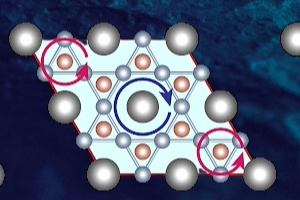
The behavior of the core hole created in molecular
x-ray photoemission experiments has provided molecular scientists
with a valuable window through which to probe the electronic
structure and dynamics of molecules. But the answer to one fundamental
quantum question—whether the core hole is localized or
delocalized—has
remained elusive for diatomic molecules in which both atoms are
the same element. An international team of scientists from the
University of Frankfurt in Germany, Berkeley Lab, Kansas State
University, and Auburn University has now resolved the issue
with an appropriate twist of quantum fuzziness. By means of coincident
detection of the photoelectron ejected from molecular nitrogen
and the Auger electron emitted femtoseconds later, the team found
that how the measurements are done determines which description—localized
or delocalized—is valid. Full
story.

Publication about this research: M.S. Schöffler,
J. Titze, N. Petridis, T. Jahnke, K. Cole, L. Ph.H. Schmidt,
A. Czasch, D. Akoury, O. Jagutzki, J.B. Williams, N.A. Cherepkov,
S.K. Semenov, C.W. McCurdy, T.N. Rescigno, C.L. Cocke, T. Osipov,
S. Lee, M.H. Prior, A. Belkacem, A.L. Landers, H. Schmidt-Böcking,
Th. Weber, and R. Dörner; "Ultrafast probing of core
hole localization in N2," Science 320,
920 (2008).
Markus Schoeffler |
Enzyme
Structure Provides Insights into Cancer and Aging
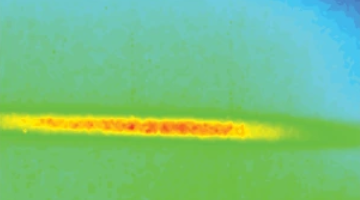
XPD helicase is an enzyme that unwinds the
DNA double helix; it is one component of an essential repair
mechanism that maintains the integrity of DNA. XPD is unique,
however, in that pinpoint mutations of this single protein are
responsible for three different human diseases: in xeroderma
pigmentosum (XP), extreme sensitivity to sunlight promotes cancer;
Cockayne syndrome (CS) involves stunted growth and premature
aging; trichothiodystrophy (TTD), characterized by brittle hair
and scaly skin, is another form of greatly accelerated aging.
At the ALS, researchers from Berkeley Lab and The Scripps Research
Institute recently solved the structure of XPD. The structure
gives novel insight into the processes of aging and cancer by
revealing how discrete flaws—as
seemingly insignificant as a change in either of two adjacent
amino acid residues—can lead to diseases with completely
different physical manifestations. Full
story.

Publication about this research: L. Fan, J.O.
Fuss, Q.J. Cheng, A.S. Arvai, M. Hammel, V.A. Roberts, P.K. Cooper,
and J.A. Tainer, "XPD
helicase structures and activities: Insights into the cancer
and aging phenotypes from XPD mutations," Cell 133, 789
(2008).
Jill Fuss |
Guest
House Survey: Room Layouts and Furnishings
The Berkeley Lab Guest House is on schedule
for a July completion and opening. The Guest House building is
now watertight, and electrical installation has started. The
Guest House will have 57 guest rooms with an additional lounge/kitchenette.
It is expected that tentative bookings might be taken as early
as April or May, to be confirmed in June.
Sited near the ALS building, the Guest
House is expected to be popular with ALS users. Room furniture
will be ordered within the next few weeks and we would like your
input to help us choose the appropriate room layouts and furnishings
to meet your needs (see possible room layouts at the ALS Housing page).
Your input is valuable and will be used to help the contractors
make decisions. If you're an ALS user who plans to utilize the
Guest House, please complete the short survey at the link below
so that we know what will work for you (the survey also includes
a few short questions about light-source safety practices and
the general-user proposal process).
Take
the ALS Guest House survey.

A sample of two possible room layouts for the
Berkeley Lab Guest House. Click on the link above to see more
layouts and take a short survey about what you'd like to see
in the Guest House.
Sue Bailey |
Two
Important Strategic Documents Now Available Online
A
white paper titled "Science and Technology
of Future Light Sources," a collaboration between scientists
from Argonne National Laboratory, Brookhaven National Laboratory,
Lawrence Berkeley National Laboratory, and SLAC National Accelerator
Laboratory, is now available in PDF format. This 87-page document
envisions the scientific challenges that can be met by future x-ray
sources and instrumentation and summarizes the research and development
required to achieve that vision. Scientific challenges, or "drivers," such
as understanding and controlling dynamic phenomena, chemical reactivity,
complex materials, novel materials design and behavior under extreme
conditions, and life science and soft condensed matter are covered,
with a discussion of "What Is Needed?" for each of these
areas. Closing chapters discuss types of x-ray sources, their capabilities
and trade-offs, and other considerations.
Download
"Science
and Technology of Future Light Sources."
Working
closely with our U.S. Department of Energy (DOE) sponsors, advisory
committees, user community, and beamline scientists, the ALS has
developed a new strategic plan titled "The Advanced Light Source
Strategic Plan: 2009–2016." Subtitled "Addressing
the Scientific Grand Challenges and Our Energy Future," the plan
not only aims to keep the ALS at the forefront among its peers, but
also responds to the challenge of establishing unique scientific programs
capable of achieving the breakthroughs in fundamental research needed
to put advanced energy technologies within reach. Four key focus areas
provide the foundation for the new plan: New and upgraded beamlines,
accelerator renewal, enabling technical capabilities, and user
scientific support and future scientist pipeline. A chapter devoted
to each focus area describes specific elements of the plan, including
what funding will be needed, roughly in priority order.
Download
"The Advanced Light Source Strategic Plan 2009–2016." |
Wanted:
Energy-Related Highlights
The
ALS is always on the lookout for science highlights to publish
in ALSNews, post on our Web site, and send to our funding agency,
DOE. In the past, our focus has been on research
published in the so-called "high-profile" journals: Nature,
Science, Physical Review Letters, and Cell (for structural biology).
It has not escaped our attention, however, that many interesting
and worthwhile experiments by ALS users get overlooked using
this tight screen. Therefore, we would like to encourage users
to submit their work for consideration as science highlights—particularly
on energy-related topics—as long as it has been either published
or accepted for publication in a peer-reviewed journal. "Energy-related" is
of course a broad category, covering topics from catalysis and
combustion to batteries and solar cells. If you would like to
help "energize" our
science highlights, please submit your research paper(s) to the
ALS Communications Group.
Lori Tamura |
__________________________________________________ |
Operations |
|
|
The beam reliability
and completion numbers for the user runs from January 21 to February
15, 2009, were not available at the time of publication. Please
check back here later this week, where the information will
be postedk.
Questions about beam reliability
should be sent to David Richardson.
Requests
for special operations use of the "scrubbing" shift
should be sent to Rick Bloemhard (ALS-CR@lbl.gov, x4738).
Long-term and weekly operations schedules are available here. View the ring status in real time here.
____
*Time delivered/time scheduled
**Percent of scheduled beam delivered without interruption
|
|
 |
|